
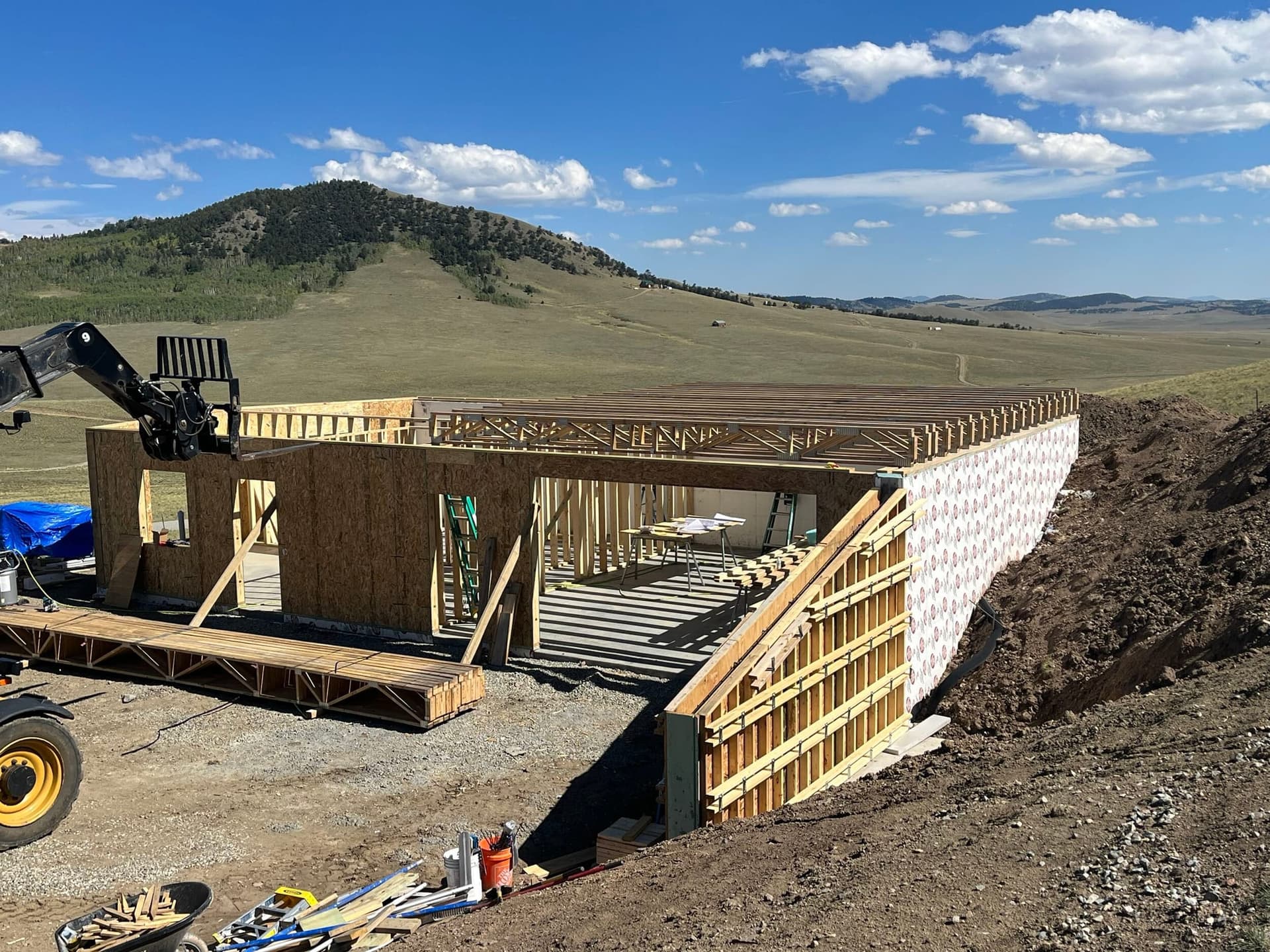
Built for the Colorado That Actually Shows Up
Hail, fast-moving wildfire, local snow loads, and site-specific wind exposure turn resilience from a talking point into a design input.
Code establishes a floor. The site establishes the problem.
Northern Colorado does not present one uniform hazard profile. The useful resilience conversation starts with the jurisdiction, elevation, exposure, insurance market, and owner priorities, then chooses assemblies that address the risks supported by that evidence.
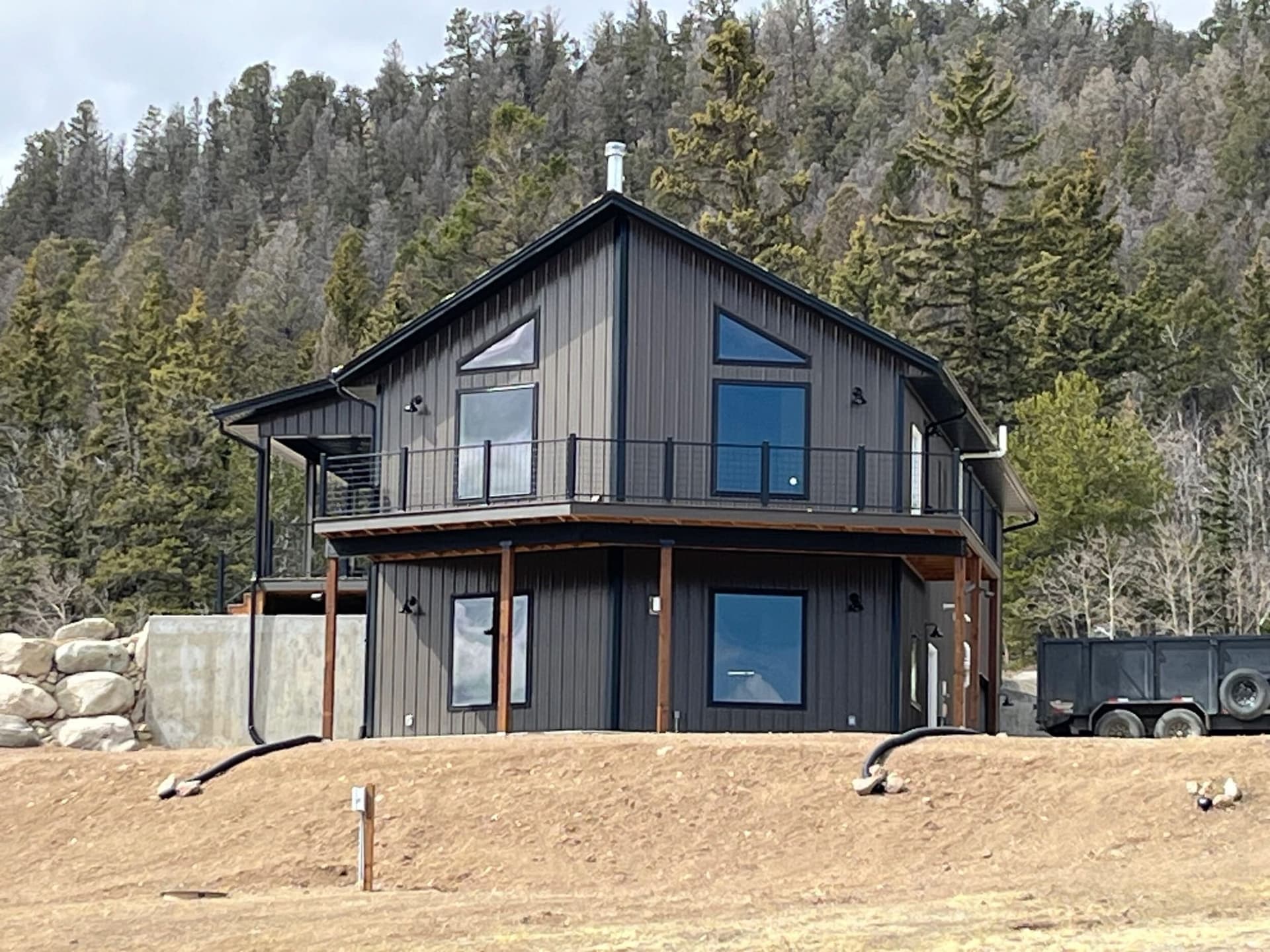
Hail is Colorado's recurring insurance event.
The Front Range sits in Hail Alley, Colorado ranks second nationally in hail claims, and hail drove the state's insured losses in eight of eleven reported years. The May 2017 Denver-metro storm alone caused an estimated $2.3 billion in damage. Class 4 impact-resistant roofing and durable exterior choices are options to evaluate against site exposure, insurer requirements, and replacement cost—not automatic promises about every project.1
Hail Alley exposure
Impact-rated options
Insurance coordination
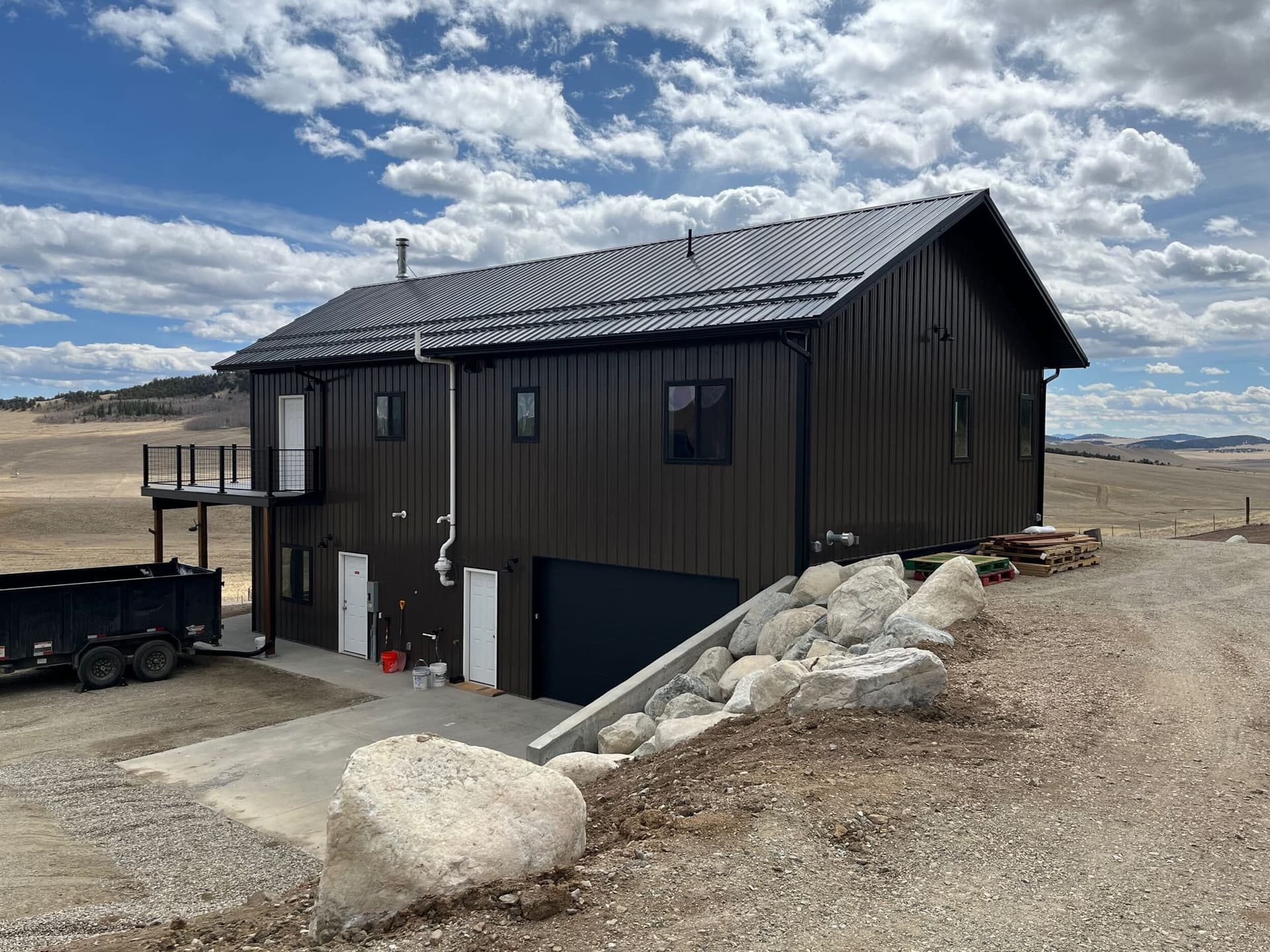
The Marshall Fire changed the wildfire map.
Wind gusts above 100 mph drove the December 2021 Marshall Fire through Boulder County grass and subdivisions, destroying 1,084 homes in roughly six hours. More than half of Coloradans live in the wildland-urban interface. Depending on the site, the design conversation can include ignition-resistant materials, protected vents, Class A roofing, and noncombustible zones at grade.2
Grass-driven fire
Windborne embers
Site-specific detailing
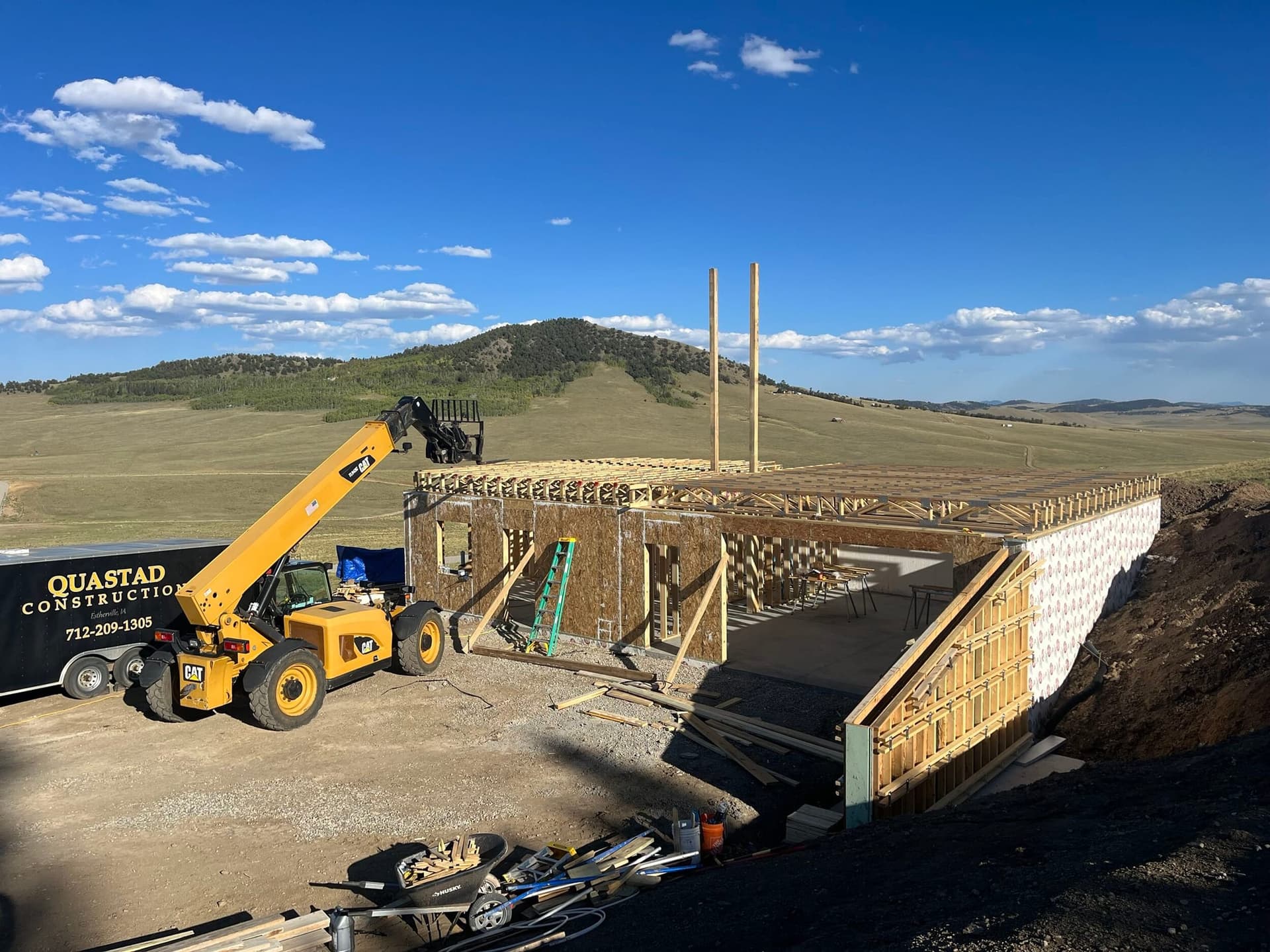
Snow and wind are local engineering numbers.
Colorado snow loads are set locally and change sharply with elevation. Larimer County references Structural Engineers Association of Colorado data and applies site-dependent roof and wind requirements; current county guidance includes a minimum uniform roof snow load of 35 psf and basic wind speeds from 115 to 225 mph depending on location. SIP industry tests and storm case reporting add useful—but separately labeled—evidence about panel performance.3
County-set loads
Site exposure
Engineer-led decisions
Swipe to compare
| Measure | Generic Assumption | Colorado-Ready Approach |
|---|---|---|
| Snow-load basis | One default number | County and site-specific design3 |
| Basic wind speed | Jurisdictional minimum | 115–225 mph in Larimer County, site dependent3 |
| SIP wall testing | Code-required assembly | 140+ mph simulated loads4 |
| Severe-storm field report | Assembly performance varies | Ramrod Key SIP home remained structurally intact5 |
Research behind the page
Sources & Citations
- Rocky Mountain Insurance Information Association and Colorado Division of Insurance, public hail-loss reporting. Colorado ranks second nationally in hail insurance claims; hail has been the leading driver of the state's insured losses in eight of the past eleven years; the May 2017 Denver-metro hailstorm caused an estimated $2.3 billion in damage.
- National Oceanic and Atmospheric Administration (Climate.gov) and University of Colorado Boulder Natural Hazards Center, post-event reporting on the Marshall Fire, Boulder County, CO (December 30, 2021). Colorado's most destructive wildfire on record, destroying 1,084 homes in approximately six hours, driven by wind gusts exceeding 100 mph; more than half of Coloradans live in the wildland-urban interface.
- Larimer County Building Department and Structural Engineers Association of Colorado (SEAC), Colorado Design Snow Loads and county structural design standards. County-specific ground snow load, roof snow load, and basic wind speed requirements referenced for Northern Colorado construction.
- Industry testing dataSIPA-conducted missile-impact and high-wind testing, evaluated alongside APA – The Engineered Wood Association. SIP wall assemblies withstood simulated wind loads of 140+ mph and debris impact without structural failure.
- Industry testing dataIndustry case reporting on Hurricane Irma (2017): a SIP-built home in Ramrod Key, FL, engineered for 200+ mph winds, remained structurally intact while neighboring conventionally-framed homes were destroyed.
Sources marked “Industry testing data” reflect structural insulated panel industry testing and manufacturer field data, cited here by source rather than represented as independent research. All other sources draw on independent government, national laboratory, and public agency data.
Ready to talk through a project?
Share the project type, location, timeline, and finish level you have in mind. Kiefer Built can help determine fit before planning gets too far ahead.